Advertisement
*Richard A. Fowler | The Network Journal | Exclusive Interview*
For Richard A. Fowler, influence is not simply measured by national visibility, professional accolades, or access to powerful institutions. It is defined by the responsibility to elevate overlooked voices, challenge conventional thinking, and create meaningful opportunities for others. As the distinguished political commentator, journalist, and educator celebrates a decade as a contributor to Fox News, his career reflects an extraordinary intersection of intellectual conviction, professional resilience, and purposeful leadership. From his contributions to Forbes and his work as an adjunct professor at Georgetown University to co-creating *The Brothers’ Briefing*, Fowler has cultivated a multidimensional platform that extends far beyond political commentary. Grounded in the sacrifices of his Jamaican immigrant mother, the mentorship of influential educators, and an unwavering belief in economic opportunity, Fowler continues to redefine what it means to exercise influence with integrity. In this exclusive conversation with *The Network Journal*, he reflects on the business of political journalism, the economic empowerment of Black communities, the importance of representation, and his commitment to ensuring that the doors of opportunity remain open for generations to come.
—
As you celebrate ten years as a contributor to Fox News, what defining moments have shaped your professional journey, and what lessons about perseverance, leadership, and personal conviction have contributed to your longevity in a highly competitive industry?
I don’t think it’s a coincidence that my tenth anniversary at Fox News comes at a moment when voters across the country are once again speaking loudly at the ballot box. In many ways, the lesson of this past decade has been right in front of us.
When I joined the network, we were just months away from Donald Trump’s first election. Voters were frustrated with a political establishment they believed had stopped listening to them. Ten years later, we’re seeing some of those same frustrations play out again. Different political parties, different circumstances, but a familiar feeling: that too many people in positions of power believe only certain voices deserve a seat at the table, and only certain experiences should shape our public policy.
My life and my family’s story have taught me something very different.
I was raised by a single mother, a Jamaican immigrant who spent her career caring for some of the most vulnerable patients as a neonatal intensive care nurse. I know firsthand that the NICU nurse deserves a seat at the policymaking table. So does the middle school history teacher, the Black firefighter, the home health aide, and the small business owner trying to make payroll.
These aren’t just people we should talk about when an election rolls around. These are the people whose experiences should help shape the decisions we make as a country.
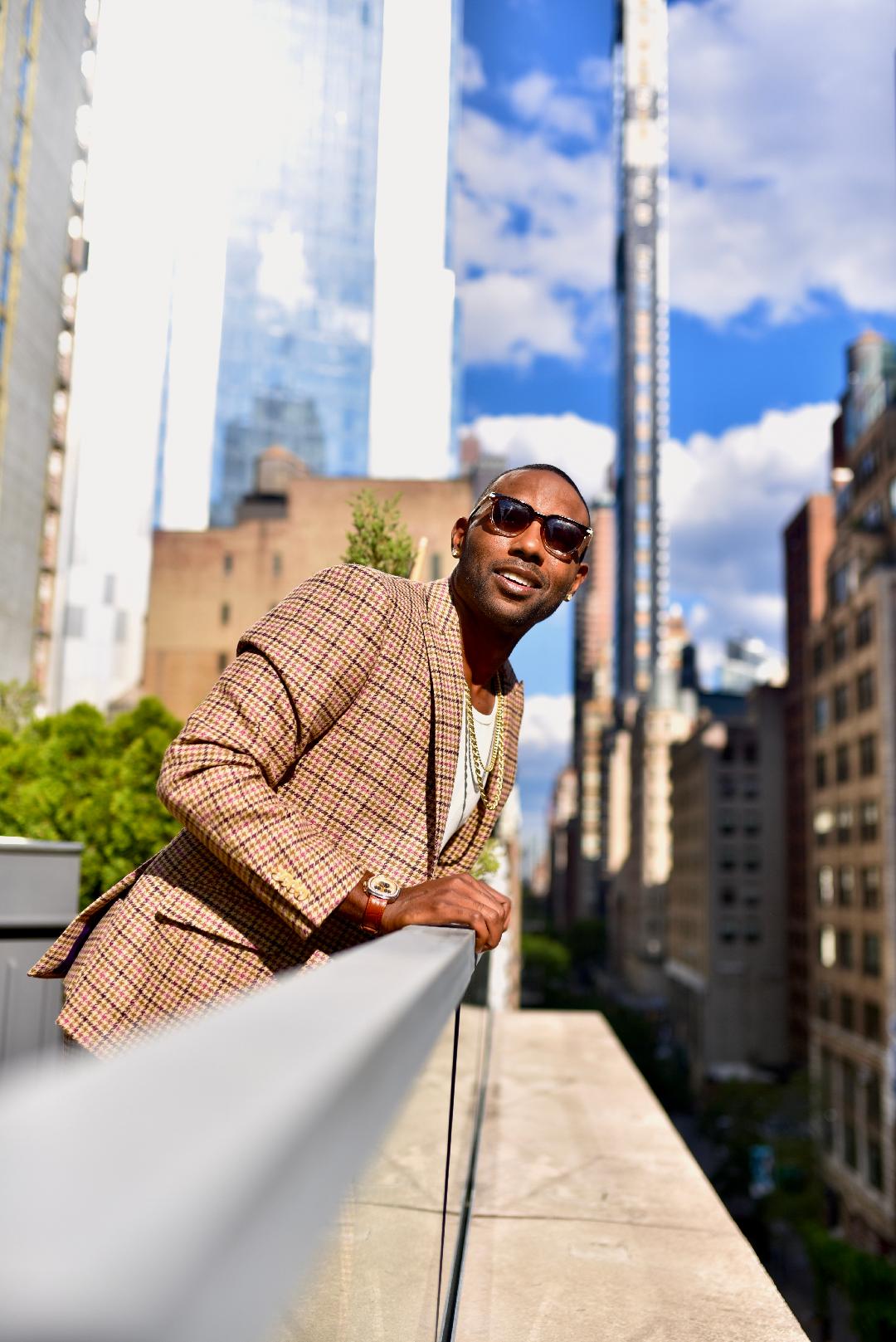
For the past ten years, I’ve tried to carry those voices with me into every television studio, every remote broadcast booth, and every article I write for Forbes. Even when my perspective is different from everyone else at the table, I’ve never believed that being in the minority means your voice matters any less.
If there’s one lesson I’ve learned about perseverance and longevity, it’s that you have to know who you are, where you come from, and who you’re speaking for. You also have to be willing to listen, particularly to people who see the world differently than you do.
I hope that’s what has made me competitive in this industry. More importantly, I hope that’s what has made my work meaningful.
Building a successful career in national media requires more than talent. How have you strategically developed your professional brand, cultivated meaningful relationships, and positioned yourself as a respected voice in political journalism?
According to my mother and my aunts, I was born a storyteller. Apparently, I was speaking in full sentences much earlier than most children. I talked so much that my godmother bought me a little Fisher-Price karaoke machine with a microphone and tape deck when I was about three years old.
I can still remember walking around the house talking into that microphone, even when I didn’t have an audience, or batteries for that matter. Clearly, I had something to say, and I wasn’t particularly concerned about whether anybody was listening.
But being a good talker isn’t enough to build a career in journalism. You have to have something meaningful to say, and you have to do the work to back it up.
About halfway through my time at Fox, I made the decision to return to school and pursue a master’s degree in journalism at Georgetown University. I didn’t do it because I needed another credential. I did it because I wanted to become a better storyteller, a stronger writer, and a more thoughtful political analyst. I wanted to sharpen my ability to construct arguments, ask better questions, and tell stories that help people understand how the decisions made in Washington affect their everyday lives.
I’ve also learned that relationships are everything in this business, but I don’t believe in building relationships based solely on what someone can do for you.
I try to treat everyone I encounter with kindness and empathy, whether it’s the person greeting guests at the studio, a fellow contributor, a producer, or a network executive. The media business is a fascinating place. Today’s guest greeter might be tomorrow’s executive producer. The person sitting next to you in the greenroom might eventually anchor their own show. You never know where someone’s journey will take them.
More importantly, people remember how you made them feel long after they’ve forgotten what you said.
I think the strongest professional brand is one built on consistency. People should know what they’re getting when they work with you. For me, that’s someone who comes prepared, treats people with respect, brings a thoughtful perspective, and understands that the story is always bigger than the person telling it.
And perhaps that little boy with the Fisher-Price microphone understood something I still believe today: everybody has a story worth telling. I’ve just been fortunate enough to make a career out of telling them.
As a progressive commentator on a network known for its conservative perspectives, how have you navigated ideological differences while protecting your professional integrity, expanding your influence, and creating opportunities for meaningful dialogue?
In 2023, I lost one of the most influential educators in my life, my high school debate coach, James Wakefield. After moving through the grief of losing him, I found myself reflecting on the lessons he taught us, many of which I still carry with me today.
I was part of the traveling debate squad at Fort Lauderdale High School, a public school in South Florida. To be honest, many of the tournaments we competed in weren’t necessarily built for kids like us. They were dominated by private schools with multiple coaches, enormous resources, and the ability to travel around the country without worrying about how they would pay for it.
That wasn’t our reality.
We sold cheesecakes and cookie dough. We begged, borrowed, and did just about everything short of stealing to get ourselves to tournaments. My mother picked up extra overtime shifts to help pay for my trips. We squeezed four students into hotel rooms because that’s what we could afford.
And when we arrived, it was hard not to notice the differences.
That feeling of being an outsider can really shake a teenager’s confidence. But Mr. Wakefield never allowed us to believe that having fewer resources meant we had less ability.
He would remind us, “You’re just as good. You’re just as smart. Now show them what you’ve got.”
And that’s exactly what we tried to do.
I remember when we made it to the finals of a tournament, Mr. Wakefield would pace the hallways outside the debate room. Back then, I didn’t think much of it. He was always so confident in us, smug as ever, reminding us that we belonged in those rooms. It wasn’t until years later that my mother explained what I had been watching. He was nervous, too.
Here was this man who had taught us to walk into unfamiliar rooms with our heads held high, quietly pacing the hallway because he wanted so badly for us to succeed. He was navigating some of those same feelings of being an outsider, but he never allowed his own nerves to become our limitation.
I think about him often when I walk into a television studio.
Being a progressive commentator at Fox News means that there are plenty of moments when my perspective is different from nearly everyone else at the table. But Mr. Wakefield taught me that being outnumbered doesn’t mean you’re outmatched, and being in the minority doesn’t mean you don’t belong.
I’ve never believed that I have to abandon my convictions to have a meaningful conversation with someone who disagrees with me. In fact, I think the opposite is true. The stronger your understanding of your own beliefs, the more willing you should be to listen, ask questions, and engage with people who see the world differently.
That’s how I’ve tried to approach my work over the past decade. I come prepared, make my arguments, listen carefully, and recognize that disagreement doesn’t have to mean disrespect.
And sometimes the most important person you’re speaking to isn’t the person sitting across the table. It’s the viewer at home who might be hearing a different perspective for the first time.
I don’t know if Mr. Wakefield ever imagined that one of those kids selling cheesecakes to get to a debate tournament would eventually spend ten years debating politics on national television. But I know this: every time I take my seat at that table, a little bit of him is sitting there with me.
Your work frequently examines the economic realities facing working-class Americans and Black communities. What policies and economic opportunities do you believe are most critical to advancing Black entrepreneurship, wealth creation, and long-term financial stability?
I don’t have a rich uncle or a well-connected aunt who opened doors for me. I’m here by God’s grace, my mother’s labor, and the power of a labor union.
I’m here because James Wakefield and the educators in Broward County cared enough to invest in kids like me. And because they had a union and a collective bargaining agreement that helped give them the resources and professional voice to build a curriculum that taught us something important: this democracy was big enough for us, too.
My grandfather was a cabdriver at the airport in Montego Bay, Jamaica. My mother immigrated to this country and spent decades working as a nurse. And here I am, a generation later, celebrating ten years at one of the most-watched television networks in America, contributing to some of the biggest conversations in our national political life.
That journey didn’t happen in a vacuum. It happened because people worked hard, made sacrifices, and because there were institutions that helped turn their hard work into opportunity.
So when I think about economic policy, particularly for Black Americans, I think about what it takes to make that kind of journey possible for the next generation.
We have to strengthen the right to organize and collectively bargain. We have to invest in public schools and make higher education and workforce training more affordable. We have to make it easier for Black entrepreneurs to access affordable capital, build businesses, hire workers, and pass something on to their children. And we have to expand pathways to homeownership, because for so many American families, owning a home remains one of the most important ways to build generational wealth.
But none of those things happen if people are working harder than ever and still can’t afford their rent, groceries, childcare, or healthcare.
To be honest, I think that’s part of what voters were telling us in the 2026 midterm elections. Americans are frustrated with an economy that they increasingly believe works better for the wealthy and well-connected than it does for everyone else. Fox News polling has captured that frustration, with a majority of Americans saying the economic system is rigged in favor of the wealthy.
And I believe part of my responsibility as a journalist and commentator is to communicate not just why people feel that way, but how we begin to unrig that system.
Because I know what happens when working people are given a fair shot. I’m living proof of it.
My obligation is to carry the people who made my journey possible into every conversation I have about this country’s future. The nurse, the teacher, the cabdriver, and the kid or grandkid who deserves the same chance I had.
The goal shouldn’t simply be to celebrate the exceptional story of someone who made it. It should be to build an economy where stories like mine aren’t so exceptional in the first place.
As a Forbes contributing writer, you’ve explored emerging political coalitions and the influence of Black voters. How do you see the relationship between political participation, economic empowerment, and the ability of African Americans to shape decisions in corporate America and government?
Our economic success and our political participation are directly linked. And anyone who doesn’t see that hasn’t been paying attention to what’s happened in this country over the past two years.
As corporations and the federal government rolled back their diversity, equity, and inclusion efforts, we watched qualified Black women have their accomplishments questioned, not because of their abilities, but because of the color of their skin.
We watched opportunities for Black-owned businesses come under threat as government contracts and corporate commitments changed. Meanwhile, public schools in our communities are struggling to close budget gaps, with some facing the possibility of closing their doors.
These aren’t abstract political debates. They determine who gets a job, who can build a business, and whether families can create generational wealth.
I believe the 2026 midterm elections were, in part, a backlash to those realities. Voters made clear that they want an economy and a democracy that work for more than just the wealthy and well-connected.
But voting is only the beginning. Political participation must translate into influence in corporate boardrooms, government offices, and the institutions making decisions about our communities.
Now more than ever, Americans want a democracy and an economy big enough for all of us. And guess what? That’s possible. We just have to be willing to build it.
Through The Brothers’ Briefing Podcast, you’ve created a platform dedicated to engaging Black men in conversations about public policy and culture. What inspired this initiative, and how do you envision its role in developing more informed, empowered, and civically engaged communities?
To be honest, The Brothers’ Briefing started almost by accident. During the Texas mid-decade redistricting fight, Charles Coleman Jr. and I were texting about what was happening and decided to jump on Instagram Live to talk about it. The audience response was overwhelming, so we figured we’d do it again.
Now, here we are, roughly a year later and more than 20 episodes in, with a growing community that has helped shape what this platform has become.
Our mission has always been clear: to create a space where Black men of all backgrounds, shapes, sizes, sexualities, and political perspectives can discuss public policy, politics, and culture without shame, judgment, or blame.
And I think that’s what we’ve built. Or, better yet, that’s what our audience has helped us build.
We believe deeply that Black men are a critical part of American democracy. And here’s what we know: when Black men vote, Black women win. Black children win. Black communities win. Working-class families win. Public schools win. Women’s reproductive healthcare wins. And some of the most vulnerable people in our society win.
That’s the power of political participation. It doesn’t just change the lives of the people casting the ballots. It can change the trajectory of entire communities.
And if The Brothers’ Briefing can help more Black men recognize that power, become more informed, and engage in the decisions shaping their communities, then we’re doing exactly what we set out to do.
As an adjunct professor at Georgetown University, what wisdom do you share with aspiring journalists and young Black professionals about building sustainable careers, embracing unconventional opportunities, and understanding the importance of professional credibility?
My advice is simple: Don’t be afraid. Don’t be afraid to take the unconventional path, walk into rooms where you might be the only one who looks like you, or pursue opportunities that others might overlook.
But when you get through that door, remember that you didn’t get there alone. Carry the stories of everyone whose shoulders you stand on, and never forget the responsibility you have to those who will one day stand on yours.
And above all, do the work. Your credibility is your currency, your integrity is your foundation, and your story is your greatest strength.
Having established yourself across television, print journalism, podcasting, and academia, how are you thinking about the next phase of your career, and what legacy do you hope to create through your commitment to representation, economic justice, and elevating voices that have historically been overlooked?
To be honest, I’m still figuring that out. I have a lot more stories to tell, a lot more work to do, and hopefully a few more doors to walk through.
But I know this much: I want to keep telling stories that matter, creating opportunities for voices that have too often been overlooked, and proving that where you start in life doesn’t have to determine where you finish.
I’m not quite ready to talk about my legacy because I believe my most meaningful work is still ahead of me. But when that time comes, I hope people will say that I used whatever platform I had to make room for somebody else.
And if I can leave the door a little wider open than I found it, I’ll consider that a life well lived.
Advertisement