

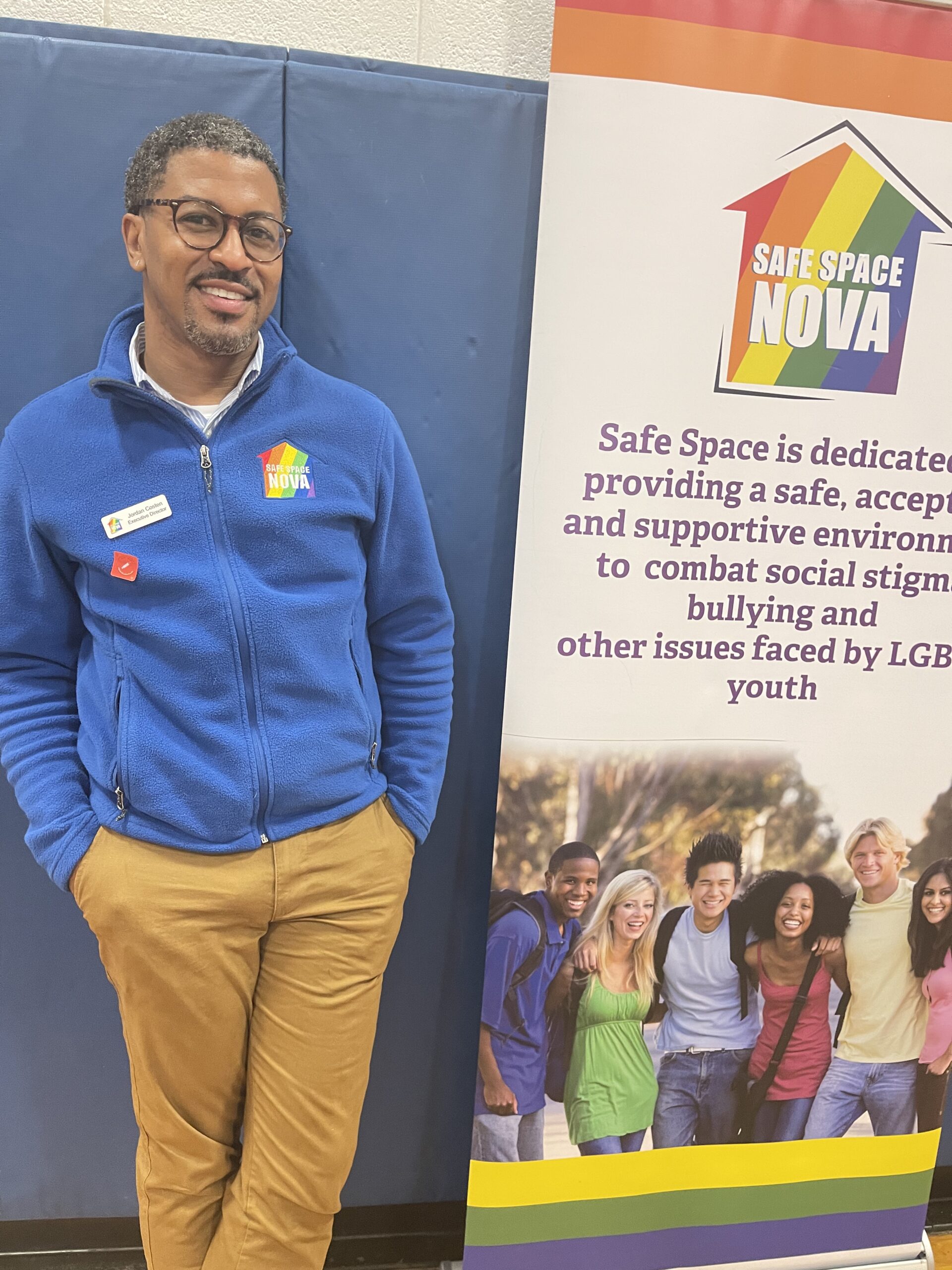
Jordan L. Costen’s journey is one of conviction, compassion, and purpose. A Howard University graduate with a background in technology, communications, and social work, Costen transformed personal insight into public impact when he founded Safe Space NOVA to support LGBTQ+ youth across Northern Virginia. His story is as much about courage as it is about calling: a commitment to bridging innovation with empathy, systems with service, and leadership with love.
In this candid conversation, Costen reflects on his evolution from corporate success to social entrepreneurship, offering wisdom on purpose-driven leadership, mental health advocacy, and the enduring power of authenticity.
What internal dialogue or defining moment prompted your pivot from a successful career in technology to mental health and nonprofit leadership?
Costen. The internal dialogue I had was, “If I don’t do it, who will?” There was a clear gap. Necessary programs simply weren’t available in such a large area. Knowing this, it felt incumbent on me to take up the mantle and determine how to address that gap. It wasn’t easy by any means, but the potential impact of the programming became a powerful motivator. I was also fortunate to have an amazing group of friends who answered the call with me. They brought their skills and talents to help establish Safe Space NOVA, making the work both possible and meaningful.
How did you move from vision to execution—turning your personal calling into an operationally sound and sustainable organization?
Costen. Education has always been key. When I founded Safe Space NOVA, I had two degrees in communication and years of experience in information technology as an account manager. I did not let gaps in my knowledge deter me; instead, I viewed them as opportunities for growth. Shortly after founding the organization, I began attending night classes at a local junior college to earn a certification in nonprofit leadership and administration; classes that continue to pay dividends to this day. My advice to others: if you want something, pursue it with the intensity it deserves.
How do you balance the demands of leadership with the emotional labor of care?
Costen. I maintain balance through a constantly evolving list of priorities. A key strategy for me is keeping a comprehensive list of all my responsibilities, both personal and professional. Nothing is excluded. Each day, I determine the top priorities, whether that includes client meetings, team check-ins, responding to Safe Space NOVA inquiries, or other tasks. With only so many hours in a day, I focus on completing my top five items. If time allows, I may move on to one or two additional tasks, but more often I wait until the next day. I embrace the understanding that there is only so much I can accomplish in a single day.
What principles or practices guide you in leading an organization that deals with such sensitive and personal issues?
Costen. What guides my work is always reflecting on my “why” and for whom I am doing this work. I started this organization with a vulnerable population in mind, LGBTQ+ youth. They are at the forefront of every decision we make. If an initiative does not meaningfully impact their lives or support their ability to thrive, we do not move forward with it. No matter the achievements I may reach, or the expectations placed on me, I remain actively engaged with our youth to ensure I never lose sight of my purpose and the community I serve.
How does your background in IT, communications, and clinical social work inform your approach to organizational strategy and growth?
Costen. All of my education and experience shape how I operate as both a social entrepreneur and a therapist. My background in communication informs how I identify and deliver messaging to diverse audiences. Whether speaking with the internal team at Safe Space NOVA or presenting to a local chamber of commerce, I focus on tailoring information, so it is digestible and actionable, ensuring people walk away with insights or a potential call to action. My clinical social work training enhances my ability to support others by emphasizing the importance of meeting people where they are, an approach that translates seamlessly into conveying messages about growth to stakeholders in the nonprofit sector. Additionally, my background in information technology informs my approach to knowledge gathering. As an account manager in the tech space, understanding the details of an issue is critical; without this knowledge, problems either remain unresolved or take longer to solve.
Diversity, equity, and inclusion are often discussed as abstract goals. As a practitioner and policy advisor, what does true equity look like in action?
Costen. Equity, in its truest form, begins with ensuring that all representative groups have a seat at the table, discussing what is needed to guarantee every community is afforded the same opportunities. While we have made significant progress, there is still a noticeable lack of representation in the spaces that matter most, particularly in policymaking. I want to see more people of color in both local and federal government, as well as greater representation of LGBTQ+ and disabled individuals in those spaces.
How does your participation in the One Fairfax Community Roundtable intersect with your mission at Safe Space NOVA?
Costen. I was invited to join the Roundtable for representation, as this committee was the first of its kind in Fairfax County. It was established to assist the local government in implementing its first-ever equity plan for the county. The chair of the Board of Supervisors reached out, being familiar with my advocacy work, and asked if I, or someone from my network, could serve on the commission. I gladly accepted. Safe Space NOVA continues to serve as a strong advocate for the LGBTQ+ community, and I look forward to bringing our community’s voice to any space where it is welcomed, ensuring that we are both seen and well served.
How can organizations create environments where employees and young professionals—especially those from marginalized communities—can thrive emotionally and professionally?
Costen. Bringing someone in to speak about the importance of mental health is essential in any workplace. Too often, employees feel pressured to simply “push through” whatever mental health challenges they’re facing, often at the expense of their wellbeing. This mindset can cause significant and lasting harm. Having a speaker or advocate champion mental health, supported by visible endorsement from upper management or executives, can make a powerful difference.
Taking it a step further, when leaders are willing to share their own experiences with mental health challenges in the workplace, when appropriate, it helps to normalize the conversation and reinforce the message that seeking support is a sign of strength, not weakness. As a society, we still don’t spend enough time emphasizing the importance of mental health, but progress is being made. The rise of Employee Resource Groups, ERGs, particularly those supporting marginalized communities, has created safer spaces for employees to share their experiences and feel seen, heard, and supported.
How do you remain true to yourself while navigating the expectations that come with being a visible advocate and organization founder?
Costen. My authenticity is nurtured and grounded by the people I keep close. One of my best friends, who has been by my side since we were fourteen, has witnessed every era of my life, including my journey toward becoming a social entrepreneur and therapist. Her presence keeps me grounded in a way few others can, simply because of our shared history. I would be remiss if I didn’t mention my family as well. Although my mother has passed, her memory and the values she instilled in my sister and me continue to guide us every day. My siblings also play a vital role. They know me deeply, offer unwavering support, and aren’t afraid to “check me” when needed.
A simple guiding principle that keeps me centered is this: I am no better than anyone else. It may sound simple, but it helps me maintain an authentic perspective of myself and others. As a social worker, I’ve had the privilege of helping people from all walks of life, and I carry the belief that we are all equal and deserving of the highest level of care and respect.
What advice would you offer on aligning professional success with personal fulfillment?
Costen. I love this question. A great place to start is with something I call the Level of Fulfillment or Level of Enjoyment Scale. It ranges from one to ten, where one represents no fulfillment or enjoyment, and ten represents the highest level of both. I encourage people to think about where they fall on that scale and what it would take to move closer to ten. When it came time for me to make a career decision, I used that same scale. I asked myself: Can I do this job well? Sure. But beyond a paycheck or occasional recognition, what was I really gaining? I wanted more. I wanted to feel deeply fulfilled, to land higher on that scale. That’s the challenge I offer to others: prioritize your fulfillment. Choose a career or path that aligns with who you are in this moment and moves you closer to the version of yourself that feels most alive and purposeful.
How do you define legacy—both in your life’s work and in the impact you hope Safe Space NOVA will have?
Costen. Legacy, to me, is defined by the impact I make and the change I help create. As someone who admires entertainers and creatives expressing their craft both on and off camera, I personally tend to shy away from the spotlight and all that comes with it. When I do step into the light, it is with one purpose: to help others. I want my name to be remembered not for recognition, but for the difference I was able to make, with Safe Space NOVA being a central part of that legacy. Every morning, I wake up asking myself, “Whom am I going to help today?” And every night, I rest knowing I’ve done my part to make the world a little better through the lives I’ve touched.
Safe Space NOVA continues to be an extension of that mission. Though I have stepped away from my role as executive director to fully embrace my work as a therapist, I take great pride in knowing that the organization’s support for LGBTQ+ youth will continue to thrive under new leadership. I look forward to witnessing the next generations of young people it uplifts, each one reminded that they are not alone and that they will get through this.