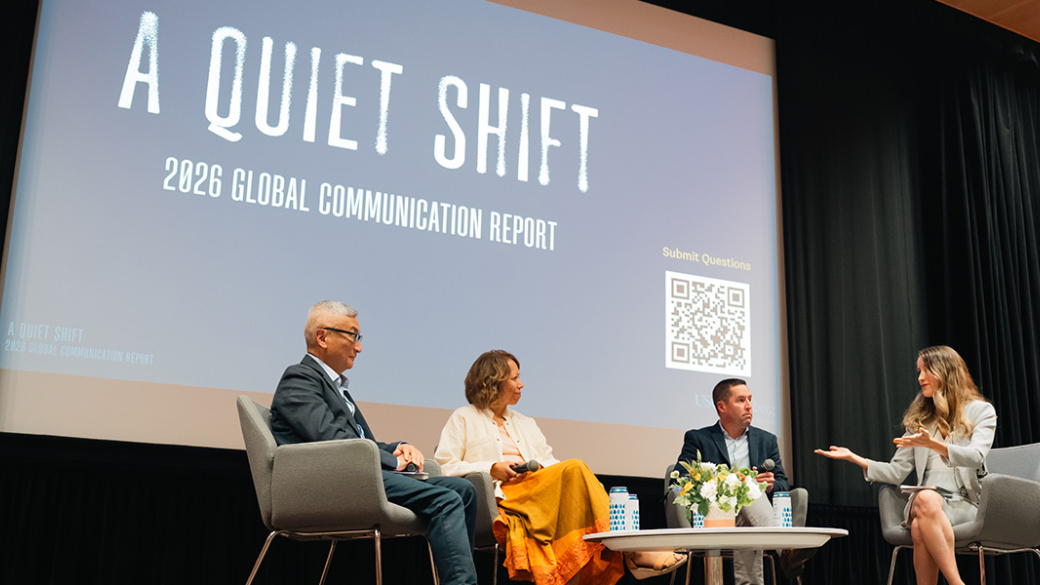
In the 2026 edition of its annual Global Communication Report, The University of Southern California’s Annenberg Center for Public Relations explores “a quiet shift” in the way companies approach public engagement.
The shift toward “a more situational approach” to corporate speech from “expansive purpose-driven dialogue,” the report says, comes in the wake of an increasingly polarized political and social environment. Companies now weigh when, how, and when not to speak on controversial issues, with in-house and agency PR teams alike calculating the risks and benefits of engagement. Emerging from this shift is a reshaping of the communications profession, elevating its strategic importance in “providing context, managing reputational risk, and helping leaders make thoughtful decisions about when to speak and when to stay silent,” the report says.
That’s a defensive posture, Center Director Fred Cook observes. “Polarization has magnified the value of PR, even though many companies are communicating less. The shift from playing offense to defense requires a different skill set— and the decisions we make today will have an outsized impact on the future of the profession.”
For this edition of the Global Communications Report—the 11th annual—the USC Center surveyed more than 700 PR professionals worldwide, polled 1,000 U.S. adults, and conducted one-on-one interviews with Fortune 500 chief communications officers. Here are five key stats from the report that Cook shared in March at the Center’s 2026 Kenneth Owler Smith Symposium, its premier annual event for PR practitioners and students:
- Support for corporate advocacy has dropped 38 percent since 2023. Only 55 percent of PR pros now say companies have a responsibility to speak out on social issues unrelated to their business;
- Polarization is bad for the world — but good for PR. Ninety-one percent of pros say it has elevated the importance of communications inside their organizations;
- Silence is a strategy. Forty-one percent of professionals say staying quiet is sometimes the most effective approach in a polarized environment. Among in-house communicators, that number rises to 52 percent;
- Government has overtaken employees and customers as the #1 stakeholder communicators are watching. More than 60 percent of PR professionals say elected officials and government agency stakeholders have increased in priority over the past year;
- Investment is shifting toward defense: artificial intelligence, crisis communications and government relations are up, while investment in DEI, sustainability, and purpose-driven work are projected to decline.
The full 2026 Global Communications Report is available at annenberg.usc.edy/gcr.