
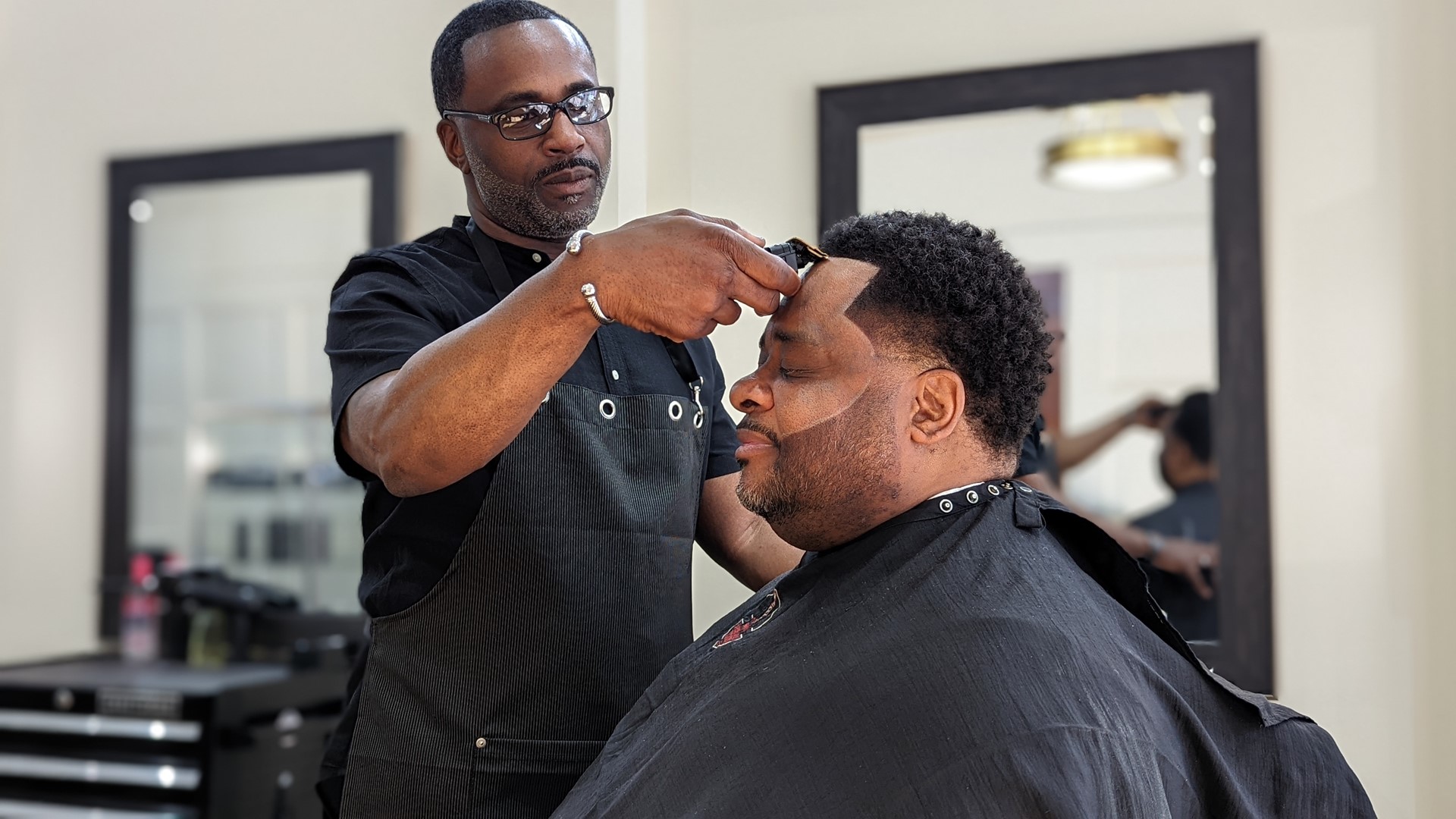
Tony Roberts’ journey is a master class in discipline, vision, and the transformative power of service. From the humble beginnings of cutting hair on his mother’s porch in Atlanta to building a respected, multi-location brand across some of that city’s most prominent districts—including College Park, Downtown Atlanta, Colony Square, Buckhead, and now Atlantic Station—Roberts has elevated barbering into both an art form and a business enterprise. With more than three decades in the industry, he has remained steadfast in his commitment to excellence, mentorship, and cultural integrity—proving that true success is not only measured by growth, but by the ability to build people, shape experiences, and leave an enduring imprint on both community and craft.
Roberts recently spoke at length with TNJ.
How did cutting hair on your mother’s porch influence your technical skill, and your understanding of service, trust, and community?
Roberts: Cutting hair on my mother’s porch was far more than the beginning of a profession—it was the foundation of my understanding of people. There was no elaborate setup, no polished environment—just a pair of clippers, a chair, and a genuine willingness to serve. Yet, within that simplicity existed something profoundly formative.
Every individual who sat in that chair extended a level of trust that went beyond appearance. They entrusted me with their time, their stories, and, at times, their vulnerabilities. What made it even more meaningful is that we were all young—14 and 15 years old—learning life in real time, together.
That porch taught me that barbering is not merely a transaction; it is a relationship. It is about shaping confidence, creating space for dialogue, and ensuring that every person feels seen, heard, and respected. No matter how elevated the environment has become over the years, I have remained grounded in that original lesson—service, trust, and community are the true cornerstones of this craft.
What has allowed you to remain relevant and respected in an ever-evolving marketplace?
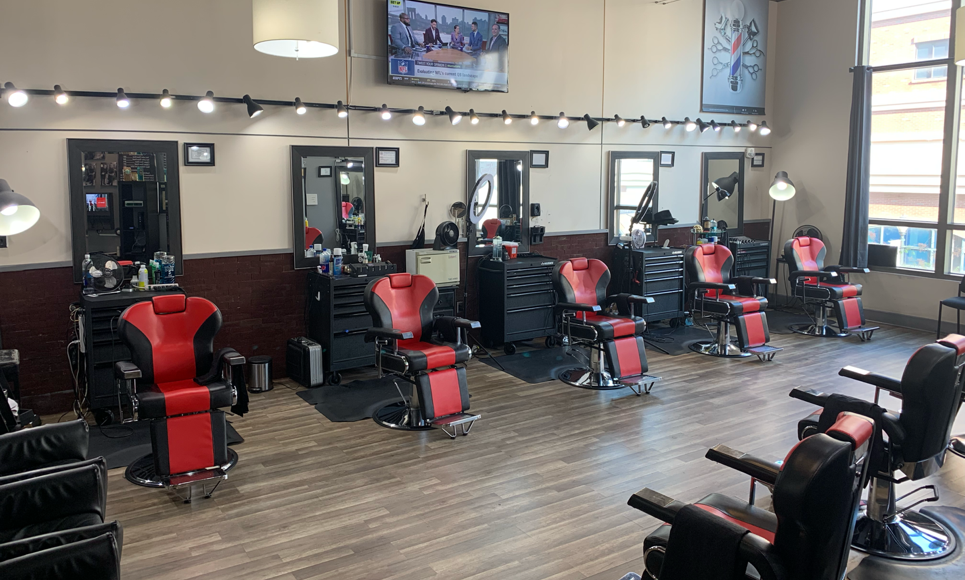
Roberts: My journey has been guided by three enduring principles: consistency, adaptability, and integrity. Consistency is about showing up every day with excellence as the standard—honoring my clients’ time and delivering a level of service that never wavers. Adaptability, on the other hand, requires evolving with the culture and the marketplace while remaining rooted in the essence of who you are. Trends will always shift, but your identity must remain intact. Integrity is the quiet discipline of doing things the right way, even when no one is watching—whether behind the chair or within the community. It is about giving back without expectation of recognition.
I have always maintained the posture of a student. The industry evolves, styles change, and business models advance, but my commitment to growth has never diminished. At the same time, I have never compromised my standards. Trends may come and go, but excellence remains timeless.
How did you scale your business while maintaining quality and consistency?
Roberts: My approach to scaling has always been centered on one core philosophy: build people, not just businesses. Too often, expansion is pursued without the necessary cultural infrastructure. For me, it was essential to first establish a clear standard and then develop individuals who could uphold that standard with or without my presence.
This required a disciplined focus on mentorship, clearly defined expectations, and systems of accountability. Each location had to reflect the same level of professionalism, service, and intentionality.
When you invest in the right people, the business naturally aligns. That is how you grow without compromising identity. Today, Tony’s Barber Studio is sustained by a team of eleven exceptional professionals—individuals who not only understand the craft, but who also embody the culture.
How did you re-imagine the traditional barbershop for the lifestyle destination of Tony’s Barber Studio?
Roberts: I began with a fundamental question: What does the modern client truly desire?
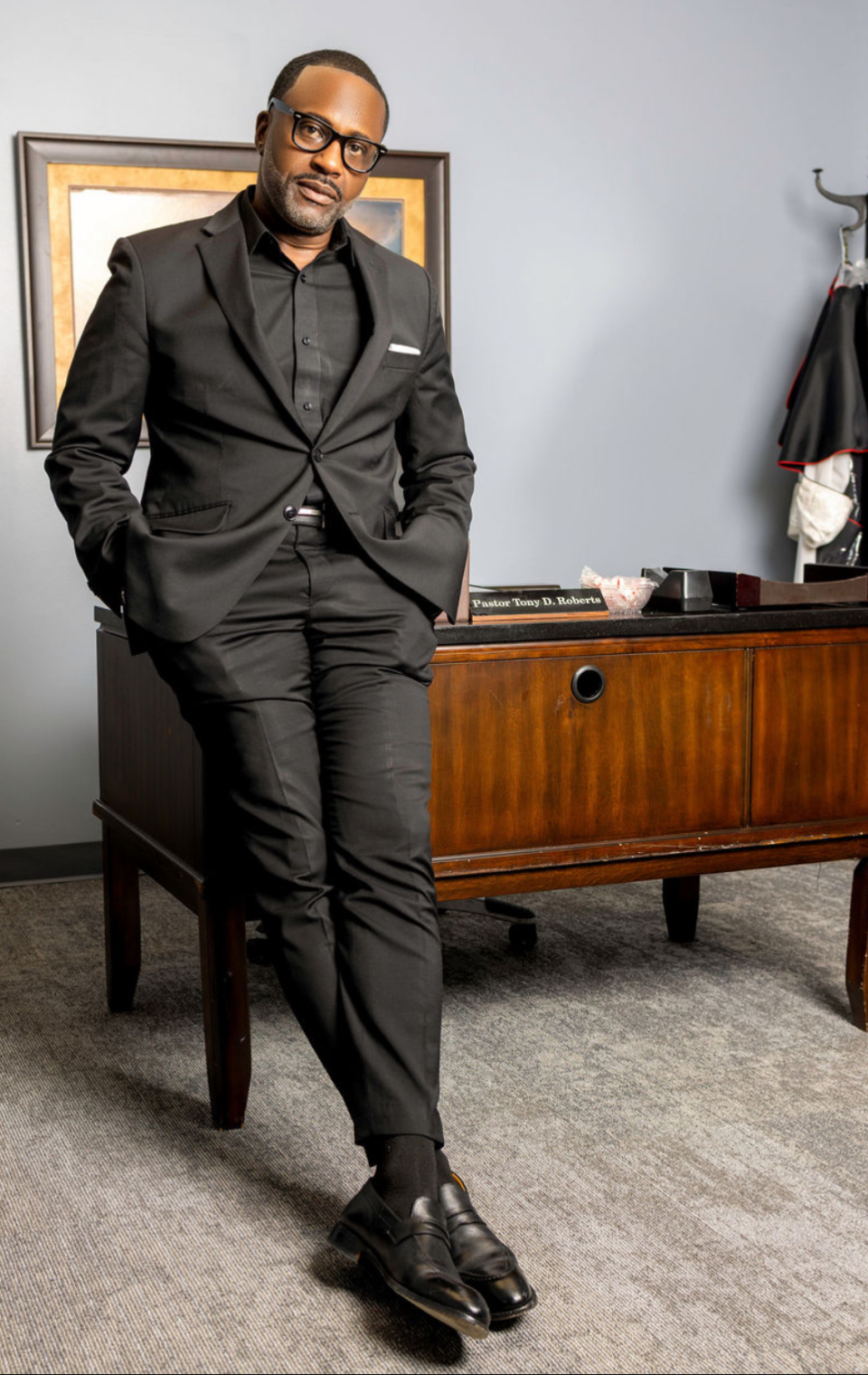
Today’s clientele seeks more than a haircut—they seek an environment that reflects professionalism, consistency, and elevated standards. With that in mind, I approached the barbershop as both a service and an experience. Every detail was intentional—from the clean, upscale design to the culture of professionalism and the respect for scheduled time. I wanted the brand to communicate excellence before a single service was even delivered.
The goal was to create a space where clients immediately recognize that they are part of something refined. Not simply a barbershop, but a curated environment where quality, care, and precision are the expectation.
How did you approach mentorship and the responsibility of shaping the next generation of barbers and entrepreneurs?
Roberts: Mentorship is deeply personal for me because I understand what it means to begin without a roadmap. My responsibility extends beyond teaching technical skill—I focus on helping individuals build sustainable careers. I emphasize discipline over raw talent, professionalism over popularity, and longevity over short-term gain. It is important that they understand that when barbering is treated as a true profession, it will reward them accordingly. When treated casually, the results will reflect that same lack of intention.
I also challenge them to think beyond the chair—to understand branding, client relationships, and the importance of ownership. The objective is not simply to earn income today, but to build something enduring that creates long-term opportunity.
What pivotal risks did you take that set you on a path to business success?
Roberts: Opening my first shop at the age of 21 was a defining risk. I did not have all the resources or a clear blueprint, but I had faith, a strong work ethic, and the foundational lessons instilled in me—particularly from my father, who taught me the value of providing and building something meaningful. Another pivotal decision was positioning my business within higher-end markets, such as Colony Square, Buckhead, and Atlantic Station. These environments required me to elevate every aspect of my operation—from branding to service delivery to mindset.
Those risks demanded growth. Each new level stretched me beyond my comfort zone and shaped the professional I needed to become. In many ways, those decisions did not just grow the business—they refined me.
In an industry rooted in culture and connection, how do you honor tradition while innovating to meet modern client expectations?
Roberts: The key is to respect the origin while remaining attentive to evolution.
The barbershop has always been a cultural institution—a place of dialogue, connection, and community. That essence must be preserved. I am fortunate to have learned from influential individuals like [the first Black mayor of Atlanta] Maynard Jackson, who shared invaluable historical perspective on the role of barbershops within the community, and [DJ, journalist, philanthropist, radio personality] Frank Ski, who emphasized the importance of staying innovative and forward thinking.
Today’s client expects efficiency, professionalism, and consistency alongside that cultural experience. My approach is to preserve the soul of the barbershop while elevating the environment and service standards. It is not a choice between tradition and innovation—it is the intentional blending of both in a way that remains authentic.
As you celebrate 10 years in Atlantic Station and more than 35 years in the craft, what does legacy mean to you as a barber and business owner?
Roberts: Legacy, to me, is measured by impact that extends beyond your presence.
It is not defined by the number of services rendered, but by the lives influenced, the individuals developed, and the standard established. It is reflected in the barbers I have mentored, the businesses I have inspired, and the culture I have helped shape.
If those who come after me are able to build upon what I have created—and perhaps even surpass it—then I have succeeded.
Ultimately, I want to be remembered not only as a skilled barber, but also as someone who invested in people, upheld excellence, and contributed meaningfully to the evolution of the industry.