
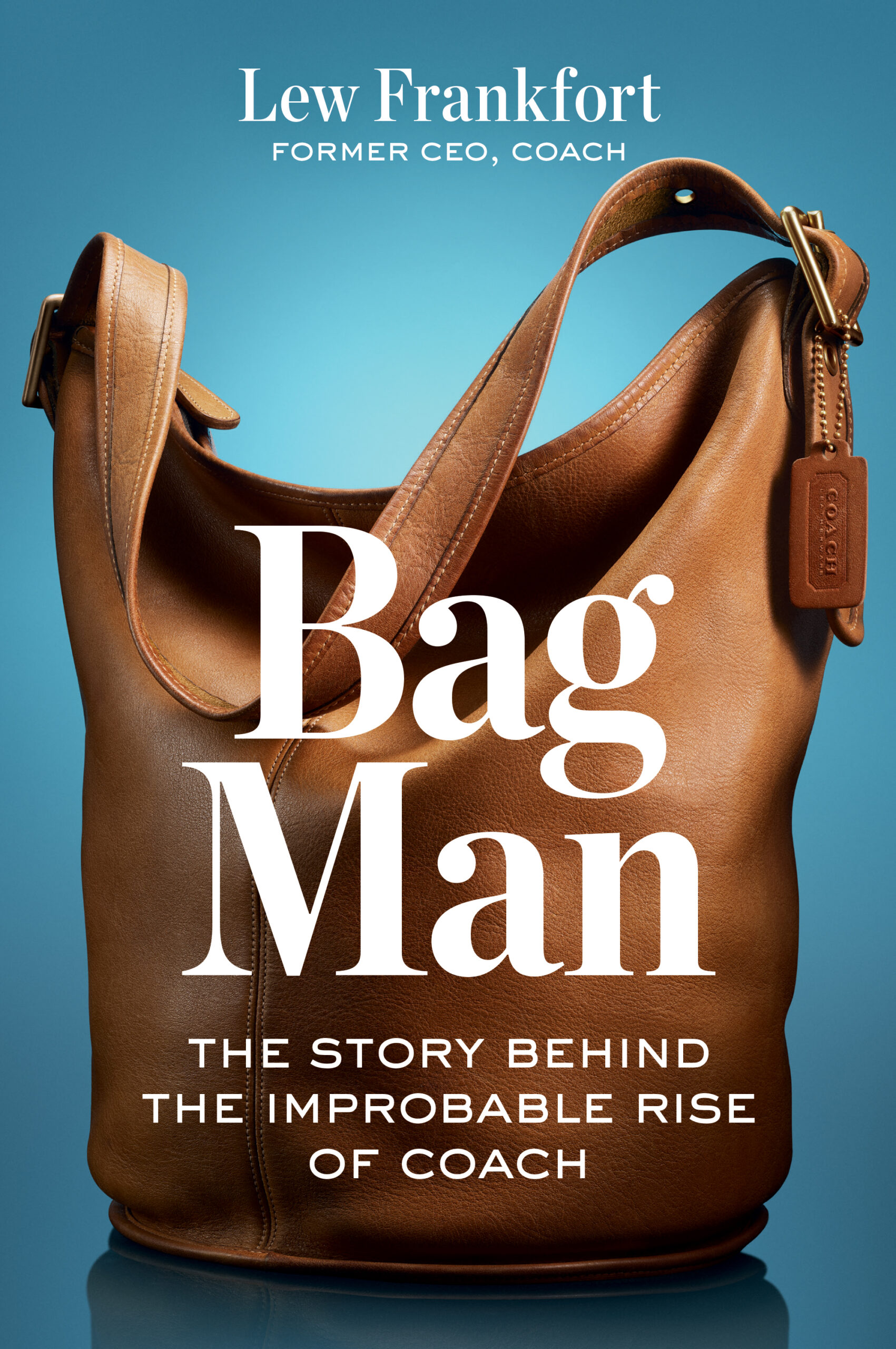
Your phone, wallet, a planner, two credit cards. Everything you need for the day is in your purse or briefcase. Tissues. A mirror and lip balm. Keys, work, and a paperback for down-time. Yes, you have pockets, but a pocketbook is better, and in “Bag Man: The Story Behind the Improbable Rise of Coach” by Lew Frankfort (Harvard Business Review Press, October 2025), you’ll read about the evolution of a classic.
Growing up in the Bronx, Lew Frankfort knew next to nothing about purses. Surely, his mother had one, but Lew’s interests lay more in baseball and running with friends. Later, he became interested in human behavior and politics. Even in college, handbags were barely on his radar, but after graduation, marriage, becoming a father, and a series of jobs and careers that didn’t quite fit, he was primed for change. His wife had launched a diaper bag business, so he knew a little bit about satchels, which put him in a good place to accept a new challenge.
Coach, a small privately owned company that made handbags, was in search of a new employee. Now, Coach bags weren’t just purses. They were hand-made in a small factory by craftspeople who took personal pride in their product and because of that, the bags had developed a cult-like following. The owner of the company was nearing retirement and had been looking for someone to take over soon.
The learning curve was steep and the starting position was secondary, reporting to an owner-boss who didn’t seem to like change. Still, Frankfort sallied forth on his ideas, with permission and without, to grow the company. Doing so was not without issues, a lot of time away from home, and frequent nightmares of sliding down a hill. Eventually, the owner of the company told Frankfort that he “wasn’t ready to be a CEO” but that he had the tools to become one. And then the company was sold.
“I was excited,” Frankfort says. “Did I fear crashing, or that my house would slide down that steep slope? You bet I did.”
You probably don’t often think about fashion and accouterments as a sub-category of business biography, but this one fits there—although Frankfort writes about his early career as one of tumult that doesn’t at all touch upon his final, most influential career as the longtime CEO of Coach. Nonetheless: handbags, and a clear path to see how great innovators and CEOs are made, even if you might sometimes believe there’s too much detail in the narrative and too many shout-outs that won’t mean much to the average reader.
Still, with an abundance of anecdotes and a lot of subtle pointers for success, “Bag Man” is action-packed and plenty entertaining. Read it for fun if you want a different kind of biography, if you’re a fashionista, or even if you’re not particularly business-minded. It’s a book you likely will be happy to tote around.