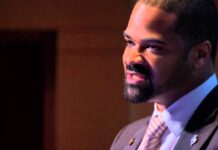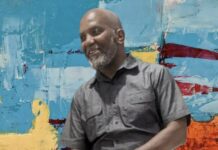

In an industry historically marked by stigma and exclusion, Dennis Turner has emerged as a voice of both conviction and compassion. As one of the few Black dispensary owners in Washington State, he has turned adversity into advocacy—building bridges between wellness, social equity, and generational wealth. Turner’s journey from witnessing his mother’s battle with Crohn’s disease to pioneering equity-driven cannabis entrepreneurship reveals the power of faith, persistence, and community. Through his company, The Euphoria Group, he is not only breaking barriers but also planting seeds of empowerment for future generations.
Your journey in the cannabis industry began with serving patients with cancer and other debilitating illnesses. How did those early experiences shape your understanding of cannabis as a tool for wellness and healing?
Turner: In the early stages of my career, cannabis was still surrounded by stigma. I was born in Berkeley, California, and raised in Detroit, Michigan, and Toledo, Ohio, by my mother—a single parent who raised me, my sister, and five nieces and nephews in a small three-bedroom apartment. When I was ten, my mom was diagnosed with Crohn’s disease, and I watched her endure excruciating pain from both the illness and the side effects of her medications. There were moments when the combination nearly took her life.
By God’s grace, she survived.
Through changes in her diet and the introduction of cannabis, her health began to improve dramatically. Doctors once said she’d be lucky to make it to my 15th birthday—now I’m 45, and she’s still here. That experience changed everything for me. It became the foundation of my journey into the medical cannabis space. My mission was to learn everything I could about the plant’s healing properties so I could serve patients with compassion, integrity, and knowledge. Even if we couldn’t cure their conditions, we could help them live with dignity and relief.
What barriers did you have to overcome to build your business in such a competitive and historically exclusive industry?
Turner: Black ownership represents maybe five percent of Washington’s entire cannabis industry. When recreational cannabis was legalized, the state issued about 500 retail and 1,500 producer and processor licenses. Out of roughly 2,000 businesses, I was the only African American retailer in all of Eastern Washington.
When I walked into the Cheney Planning Department in 2016 to apply for a dispensary license, the reaction was disbelief. Cheney is a small college town—home to Eastern Washington University—and at that time, there were no dispensaries in the area. My application caught everyone off guard and even made local news. Soon after, the city tried to deny my permit, claiming my location was within 900 feet of an “arcade.” The “arcade” turned out to be a bowling alley with two claw machines. My legal team and I fought back and won the case. Ironically, the city later passed an ordinance making my dispensary the only one ever allowed within city limits.
That victory wasn’t just about business—it was about representation, resilience, and faith. It reminded me that when you’re walking in your purpose, no one can block what God has written for you.
You’ve faced deep personal loss and adversity. How did those experiences influence you as a father, entrepreneur, and community leader?
Turner: I grew up in Toledo, Ohio, where I met my mentor and brother in spirit, Cameron Smith. Though we weren’t related by blood, he became family from the moment we met at a barbershop. Cameron wasn’t just my barber—he was my mentor, my friend, and my example of what manhood looked like. Growing up without my biological father was painful, especially knowing he was a pastor in Oakland who wanted nothing to do with me. That absence left a hole in my life, but Cameron filled it with love, guidance, and wisdom.
When he passed away, I was devastated and questioned everything, even my faith. But over time, I realized the best way to honor him was to live out the lessons he taught me.
Cameron always said, “Call the play—you’re the quarterback.” Those words became my mantra. They reminded me that leadership requires courage and composure in the face of adversity. I promised him I would keep calling the play, no matter how hard the game got. He taught me the meaning of brotherhood, resilience, and faith—and I carry those lessons with me every day.
What do you wish more members of the Black community would understand about cannabis?
Turner: I wish more people in our community would take time to truly research cannabis. This plant has so many medicinal properties that can improve quality of life. It’s a natural alternative to opioids, which have devastated countless families, especially in Black communities. Cannabis isn’t just about smoking. It comes in various forms—tinctures, edibles, capsules, and topicals—all offering relief for pain, anxiety, appetite loss, and sleep issues. Beyond health, the cannabis industry represents opportunity. It’s a gateway to financial literacy, job creation, and economic independence. Through education, access, and social equity, we can empower our community to heal and build wealth at the same time.
Share with us your vision for creating generational wealth and opportunity through your company?
Turner: My vision is to lead by example—to create a blueprint for African Americans and minorities entering this industry. I want The Euphoria Group to become one of the largest minority-owned multi-state operators in the country. That means collaboration, mentorship, and building alliances with other Black cannabis entrepreneurs.
Generational wealth begins with unity and shared purpose. I believe if we stand together—pooling our resources, knowledge, and influence—we can create an ecosystem that not only sustains us, but also uplifts those who come after us.
You’ve hosted food drives, toy giveaways, and other community initiatives through your event space in Spokane. Why is community engagement such a central part of your mission?
Turner: Community engagement is the foundation of true social equity. It’ not enough to talk about access and inclusion—you have to live it. We use our event space to host food drives, toy giveaways, educational seminars, and mentorship programs. For me, it’s about giving back to the same kind of community I came from. Cannabis opened doors for me, but it’s my responsibility to hold those doors open for others. Whether it’s through jobs, workshops, or service, I want people to see that success is measured not by what you gain, but by what you give.
What lessons have guided you through the most challenging moments of your entrepreneurial journey?
Turner: I’m a God-fearing man, and I live by the belief that God is a good author. Every chapter in life—good or bad—serves a purpose. I also hold onto the scripture, “No weapon formed against me shall prosper.” Mistakes and hardships have been some of my best teachers. They’ve taught me humility, patience, and perseverance. My journey hasn’t been easy, but I wouldn’t change it. Every setback was preparation for something greater. My hope is that young Black men and women see my story and realize that faith, consistency, and resilience can take them anywhere.
You’ve spoken of social equity in cannabis as an economic and a moral imperative. What does true equity look like to you, and how can policy better support it?
Turner: True equity means access, not just opportunity. It means that those most impacted by the War on Drugs have real support—funding, mentorship, and business development resources—to succeed in this space. Policymakers must ensure that social equity programs are more than symbolic gestures. They must provide tangible pathways for sustainability. Numbers don’t lie, but people often do. The data tell us that we’re still underrepresented. Equity isn’t achieved until the playing field is level, the doors are open, and everyone has the resources to thrive.
How do you balance your entrepreneurship with emotional and spiritual wellness?
Turner: This work is demanding, and balance is essential. I attend therapy monthly—it helps me stay grounded and sharp. I also train at the gym four times a week to release stress and keep my body aligned with my purpose. Spiritually, I practice meditation and listen to audiobooks that strengthen my relationship with God. Mental, physical, and spiritual wellness go hand in hand. I can’t pour into others if my own cup is empty.
What legacy do you hope to leave—for your family, your community, and the future of Black ownership in cannabis?
Turner: I want my legacy to be one of faith, purpose, and perseverance. I want young Black men and women to know that adversity doesn’t define you—it refines you. I want my family to look back and say I gave everything I had to create opportunities for others.
Every time I was knocked down, I stood back up. Every time I doubted myself, I prayed harder. My journey has been about believing in God’s plan and doing the work to make it real. I hope my footsteps become a roadmap for the next generation—to walk boldly, dream freely, and know that their story, too, is being written by a good author.