
One thousand, two hundred pounds and four legs. Put that between your knees and you’ll find out what real horsepower is. You’re five feet off the ground, moving as fast as a car on a downtown street, hooves pounding as hard as your heart. Dangerous? Maybe. But your ancestors did it and so can you, as you’ll see in “Mounted: On Horses, Blackness, and Liberation” (Amistad, August 2025) by Bitter Kalli, a Black queer person, essayist, and art critic.
When Kalli, born to Jamaican and Filipino immigrants, was “around the age of six or seven,” someone gave the young child a set of “pony books”—the kind that appeal to young girls, mostly white ones. Kalli wasn’t entirely comfortable identifying as a girl then but they (the pronoun she prefers) adored the books, in part because the stories featured the kinds of friendships and acceptance Kalli wanted. After devouring those stories, they begged their parents for riding lessons from a nearby Brooklyn stable.
Fast forward to 2014, when Kalli was seventeen years old, an experienced equestrian, a trans individual, and a protester at college. During that protest, the teenager watched the horses that carried the police, and wondered what those animals saw in the crowd. For that matter, what did horses see throughout Black history? In times of slavery, it was not uncommon for fleeing slaves to steal a horse or two to get away faster. In the series of essays in “Mounted,” Kalli shares heart-pounding tales of escape, sharing examples of how human chattel was often compared to that of equines in newspaper ads, as slaveholders mourned the loss of the latter much deeper than that of the former.
Many Americans are unaware of the rich contributions that African Americans made to the settling of the West. Kalli examines a popular movie, deconstructing it and adding real history to the Hollywood tale. “What we know as the Wild West would not exist without the 182,000 enslaved people living in Texas in 1860…” the author says.
Horses are featured in many of the world’s religions. Horsey language lends itself to the erotic. Even “Black and brown youth in Brooklyn” understood the appeal of a good-looking Polo pony, Kalli says.
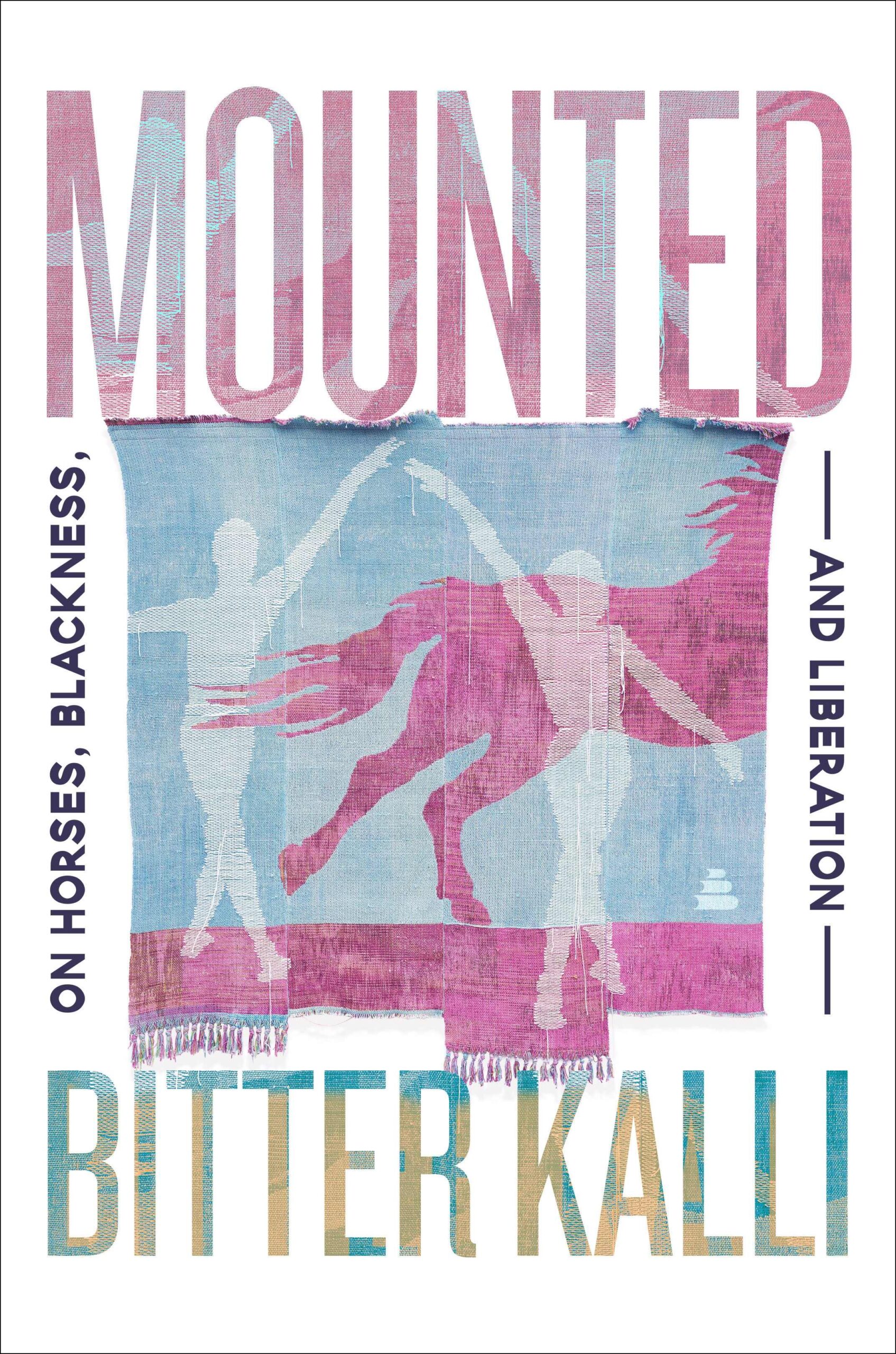
Take a good study of the cover of “Mounted.” Appreciate the artwork, notice the design. Then add this book to your “Things I Never Really Thought About” list, because you’ll think about it now. And you’re going to want to read every delicious word.
Horses have been hiding in plain sight in Black history for centuries. Kalli pulls them to the forefront, turning each facet of the subject over for deeper examination and additional thought, contending that the horse should be regarded as a critical source of power and identity in Black life. Kalli’s writing comes across like an invitation to a warm, intimate conversation, the kind you get while casually hanging out with a new group of friends on the patio. What you learn is highly intriguing, and you won’t ever see horses in the same way again.
Be aware that this book contains one explicit chapter, but it fits the narrative and you won’t mind. You’ll be too busy enjoying what you read and wanting more. For horse lovers and history lovers alike, “Mounted” is a perfect ride.